| Citation: | XU Chuan, HU Jialin, GONG Liting, JIANG Xinguo. In-vehicle Navigation Technology Considering Traffic Safety: A Systematic Literature Review[J]. Journal of Transport Information and Safety, 2025, 43(6): 1-10. doi: 10.3963/j.jssn.1674-4861.2025.06.001

|

| [1] |
SOHRABI S, WENG Y M, DAS S, et al. Safe route-finding: a review of literature and future directions[J]. Accident Analysis & Prevention, 2022, 177: 106816.
|
| [2] |
HUANG H L, WEI Y L, HAN C Y, et al. Travel route safety estimation based on conflict simulation[J]. Accident Analysis & Prevention, 2022, 171: 106666.
|
| [3] |
HOSEINZADEH N, ARVIN R, KHATTAK A J, et al. Integrating safety and mobility for pathfinding using big data generated by connected vehicles[J]. Journal of Intelligent Transportation Systems, 2020, 24(4): 404-420. doi: 10.1080/15472450.2019.1699077
|
| [4] |
MOSTAFA S M, HABASHY S M, SALEM S A. A new framework for multi-objective route planning in smart cities[C]. 8th International Conference on Advanced Intelligent Systems and Informatics 2022, Cairo, Egypt: Springer, 2023.
|
| [5] |
PAGE M J, MCKENZIE J E, BOSSUYT P M, et al. The PRISMA 2020 statement: an updated guideline for reporting systematic reviews[J]. International Journal of Surgery, 2021, 88: 105906. doi: 10.1016/j.ijsu.2021.105906
|
| [6] |
SOHRABI S, LORD D. Navigating to safety: Necessity, requirements, and barriers to considering safety in route finding[J]. Transportation Research Part C: Emerging Technologies, 2022, 137: 103542. doi: 10.1016/j.trc.2021.103542
|
| [7] |
HE Z, QIN X. Incorporating a safety index into pathfinding[J]. Transportation Research Record: Journal of the Transportation Research Board, 2017, 2659(1): 63-70. doi: 10.3141/2659-07
|
| [8] |
PEŠIĆ D, ŠELMIĆ M, MACURA D, et al. Finding optimal route by two-criterion fuzzy Floyd's algorithm—case study Serbia[J]. Operational Research, 2020, 20(1): 119-138. doi: 10.1007/s12351-017-0319-4
|
| [9] |
KRUMM J, HORVITZ E. Risk-aware planning: methods and case study on safe driving routes[C]. 29th AAAI Conference on Artificial Intelligence, San Francisco, USA: AAAI, 2017.
|
| [10] |
KINGSBURY H, HARRIS D, DURDIN P. Journey optimisation by safest route[C]. 1st Australasian Road Safety Conference, Gold Coast, Australia: ARRB, 2015.
|
| [11] |
SARRAF R, MCGUIRE M P. A data driven approach for safe route planning[J]. International Journal of Applied Geospatial Research, 2018, 9(1): 1-18.
|
| [12] |
HAYES S, WANG S, DJAHEL S. Personalized road networks routing with road safety consideration: a case study in Manchester[C]. 2020 IEEE International Smart Cities Conference (ISC2), Piscataway, USA: IEEE, 2020.
|
| [13] |
TAKENO R, SEKI Y, SANO M, et al. A route navigation system for reducing risk of traffic accidents[C]. IEEE 5th Global Conference on Consumer Electronics, Kyoto, Japan: IEEE, 2016.
|
| [14] |
JIANG S, ZHANG Y L, LIU R, et al. Data-driven optimization for dynamic shortest path problem considering traffic safety[J]. IEEE Transactions on Intelligent Transportation Systems, 2022, 23(10): 18237-18252. doi: 10.1109/TITS.2022.3165757
|
| [15] |
SOLÉ L, SAMMARCO M, DETYNIECKI M, et al. Towards drivers'safety with multi-criteria car navigation systems[J]. Future Generation Computer Systems, 2022, 135: 1-9.
|
| [16] |
RAMOS J M A M, ALMEIDA V G J, SANTANA H, et al. User-centered analysis of a safe bus routing strategy[J]. Journal of Internet Services and Applications, 2023, 14(1): 84-94. doi: 10.5753/jisa.2023.3075
|
| [17] |
KOZIEVITCH N P, MORALES C H G, AGNER L R N, et al. Safetrip: suggested itineraries to reduce accident risk factors[C]. 18th Simpósio Brasileiro de Sistemas de Informação (SBSI), Curitiba, Brasil: Sociedade Brasileira de Computação(SBC), 2022.
|
| [18] |
LIU Q, KUMAR S, MAGO V. SafeRNet: safe transportation routing in the era of Internet of vehicles and mobile crowd sensing[C]. 14th IEEE Annual Consumer Communications & NetworkingConference(CCNC), LasVegas, USA: IEEE, 2017.
|
| [19] |
CHANDRA S. Safety-based path finding in urban areas for older drivers and bicyclists[J]. Transportation Research Part C: Emerging Technologies, 2014, 48: 143-157. doi: 10.1016/j.trc.2014.08.018
|
| [20] |
ABDELRAHMAN A, HASSANEIN H S, ABU-ALI N. iRouteSafe: personalized cloud-based route planning based on risk profiles of drivers[C]. 2019 IEEE Globecom Workshops (GC Wkshps), Waikoloa, USA: IEEE, 2019.
|
| [21] |
SAHNOON I, SHAWKY M, AL-GHAFLI A. Integrating traffic safety in vehicle routing solution[C]. The AHFE 2017 International Conference on Human Factors in Transportation, Los Angeles, USA: Springer, 2017.
|
| [22] |
DIJKSTRA A. Assessing the safety of routes in a regional network[J]. Transportation Research Part C: Emerging Technologies, 2013, 32: 103-115. doi: 10.1016/j.trc.2012.10.008
|
| [23] |
LIAO X L, ZHOU T, WANG X, et al. Driver route planning method based on accident risk cost prediction[J]. Journal of Advanced Transportation, 2022(1): 5023052.
|
| [24] |
DHOLAPURIYA A, MALLAH A, SINGH Y, et al. Optimal safe route recommendation by examining roadside accident attributes[J]. Journal of Information Technology, 2019, 7(1): 29-33.
|
| [25] |
章诗琪, 魏斐斐, 范馨月. 受天气与交通事故影响的安全路线选择模型[J]. 计算机工程与应用, 2021, 57(10): 246-251.
ZHANG S Q, WEI F F, FAN X Y. Model of secure routes selection influenced by weather and traffic accidents[J]. Computer Engineering and Applications, 2021, 57(10): 246-251. (in Chinese)
|
| [26] |
BRITO M, SANTOS C, MARTINS B S, et al. Context-aware multi-modal route selection service for urban computing scenarios[J]. Ad Hoc Networks, 2024, 161: 103525. doi: 10.1016/j.adhoc.2024.103525
|
| [27] |
FU C, SAYED T. Bayesian dynamic extreme value modeling for conflict-based real-time safety analysis[J]. Analytic Methods in Accident Research, 2022, 34: 100204. doi: 10.1016/j.amar.2021.100204
|
| [28] |
GHOUL T, SAYED T, FU C. Real-time safest route identification: examining the trade-off between safest and fastest routes[J]. Analytic Methods in Accident Research, 2023, 39: 100277. doi: 10.1016/j.amar.2023.100277
|
| [29] |
TENG W, LAM W H K, TAM M L, et al. A reliability-based safest-path-finding algorithm in congested road networks with travel time uncertainties[C]. IEEE 25th International Conference on Intelligent Transportation Systems(ITSC), Macau, China: IEEE, 2022.
|
| [30] |
FELÍCIO S, HORA J, FERREIRA M C, et al. Handling openstreetmap georeferenced data for route planning[J]. Transportation Research Procedia, 2022, 62: 189-196. doi: 10.1016/j.trpro.2022.02.024
|
| [31] |
TORKEY A, ZAKI M H, DAMATTY A A E. A spatiotemporal GIS-approach for evaluating the safety of EV trips during wildfires[J]. Journal of Transport Geography, 2025, 127: 104268. doi: 10.1016/j.jtrangeo.2025.104268
|
| [32] |
EL-WAKEEL A S, NOURELDIN A, HASSANEIN H S, et al. iDriveSense: dynamic route planning involving roads quality information[C]. 2018 IEEE Global Communications Conference(GLOBECOM), Abu Dhabi, United Arab Emirates: IEEE, 2018.
|
| [33] |
程泽阳, 孙凌霞, 丁恒, 等. 车路协同环境下道路交通安全研究进展[J]. 交通运输工程与信息学报, 2024, 22(3): 14-33.
CHENG Z Y, SUN L X, DING H, et al. Research progress of road traffic safety in cooperative vehicle infrastructure environment[J]. Journal of Transportation Engineering and Information, 2024, 22(3): 14-33. (in Chinese)
|
| [34] |
GARG S, MITTAL A, SATHIYASUNTHARAM V. Deep learning based model to recommend safe route navigation system[C]. 2nd International Conference on Computational Intelligence, Communication Technology and Networking (CICTN), Ghaziabad, India: IEEE, 2025.
|
| [35] |
KATICHA S W, FLINTSCH G W. A kernel density empirical Bayes(KDEB)approach to estimate accident risk[J]. Accident Analysis & Prevention, 2023, 186: 107039.
|
| [36] |
辛怡, 李刚, 邓有为, 等. 融合PCA-LPP与DBSCAN的道路交通事故分类及风险等级预测方法[J]. 交通信息与安全, 2023, 41(4): 44-54.
XIN Y, LI G, DENG Y W, et al. Classifying road accidents and forecasting level of risk based on a combined PCA-LPP and DBSCAN method[J]. Journal of Transport Information and Safety, 2023, 41(4): 44-54. (in Chinese)
|
| [37] |
赵国强, 谢李鑫. 一种考虑行程安全性的城市绿色路径规划算法[J]. 测绘技术装备, 2025, 27(1): 33-38.
ZHAO G Q, XIE L X. An urban green path finding algorithm by considering travelling safety[J]. Geomatics Technology and Equipment, 2025, 27(1): 33-38. (in Chinese)
|
| [38] |
ALSHEREF F K. Route recommendation model Via an analytic hierarchy process (AHP)[J]. Journal of Advanced Research in Dynamical and Control Systems, 2019, 11(9): 17-24. doi: 10.5373/JARDCS/V11I9/20192768
|
| [39] |
庞劭荣, 张诗波, 罗龙浩, 等. 基于改进云组合赋权的智能网联驾驶场景安全性评价方法[J]. 交通信息与安全, 2023, 41(5): 35-42. doi: 10.3963/j.jssn.1674-4861.2023.05.004
PANG S R, ZHANG S B, LUO L H, et al. A method for evaluating safety of driving scenes with intelligent connected vehicles based on an improved cloud combination weighting[J]. Journal of Transport Information and Safety, 2023, 41 (5): 35-42. (in Chinese) doi: 10.3963/j.jssn.1674-4861.2023.05.004
|
| [40] |
朱兴林, 陈梦瑶, 刘泓君, 等. 基于多源信息融合的城市快速路驾驶风险辨识与方法[J]. 交通运输工程与信息学报, 2025, 23(2): 110-121.
ZHU X L, CHEN M Y, LIU H J, et al. Risk identification and method of urban-expressway driving based on multisource information fusion[J]. Journal of Transportation Engineering and Information, 2025, 23(2): 110-121. (in Chinese)
|
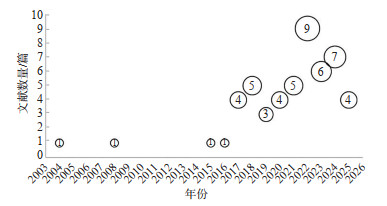
Figures(1) / Tables(3)



 DownLoad: