



Risk Factor Analysis and Path Identification Method for Runway Excursion During Landing Based on Bayesian Network
-
摘要: 针对民航飞机着陆阶段冲偏出跑道风险因素关系复杂、统计关联难以直接反映飞行物理作用关系,以及关键风险路径缺乏量化诊断的问题,研究了融合关联规则与贝叶斯网络(Bayesian network,BN)的冲偏出跑道风险分析与路径识别方法。以某航空公司B737-800机队224条有效快速存取记录器(quick access recorder,QAR)着陆记录为基础,选取飞机状态、飞行员操纵和环境风3类15个关键参数,采用Apriori算法挖掘参数间的强关联关系形成BN候选连接,并依据冲出跑道能量耗散机理与偏出跑道侧向动力学机理对连接方向进行校验,剔除缺乏物理依据的统计关联,形成数据关联与飞行物理机理联合约束的网络结构。采用期望最大化(expectation-maximization,EM)算法学习网络参数,通过互信息(mutual information,MI)识别关键风险因素,结合贝叶斯反向推理与变异率(ratio of variation,ROV)对目标高风险状态下的上游关联路径进行量化诊断。结果表明:①地速处于高风险状态时,仰角与刹车压力对应路径的ROV值分别为0.348和0.306;②垂直载荷处于高风险状态时,下降率对应路径的ROV值为3.911;③偏出跑道中,坡度处于高风险状态时,方向舵位置对应路径的ROV值为0.222。量化结果区分了不同目标高风险状态下的关键上游关联路径,实现了冲偏出跑道风险分析由关键因素识别向关键路径量化诊断的拓展。Abstract: To address the complex relationships among risk factors of runway overrun and veer-off during landing, the difficulty of directly reflecting flight-physical relationships through statistical associations, and the lack of quantitative diagnosis of key risk paths, a runway excursion risk analysis and path identification method integrating association rule mining and Bayesian networks (BN) was investigated. Based on 224 valid landing records obtained from the quick access recorders (QAR) of a B737-800 fleet from an airline, 15 key parameters in three categories, including aircraft states, pilot operations, and environmental wind conditions, were selected. The Apriori algorithm was used to mine strong associations among the parameters and generate candidate links for the BN. The directions of these links were then verified according to the energy-dissipation mechanism of runway overrun and the lateral-dynamics mechanism of runway veer-off, and statistical associations lacking a physical basis were removed, thereby establishing a network structure jointly constrained by data associations and flight-physical mechanisms. The expectation-maximization (EM) algorithm was employed for network parameter learning, and mutual information (MI) was used to identify key risk factors. Bayesian backward inference combined with the ratio of variation (ROV) was further applied to quantitatively diagnose upstream association paths under high-risk target states. The results show that when ground speed was in a high-risk state, the ROV values of the paths associated with pitch angle and brake pressure were 0.348 and 0.306, respectively; when vertical load was in a high-risk state, the ROV value of the path associated with descent rate was 3.911; for runway veer-off, when bank angle was in a high-risk state, the ROV value of the path associated with rudder position was 0.222. The quantitative results distinguish key upstream association paths under different high-risk target states, extending runway excursion risk analysis from key risk factor identification to quantitative diagnosis of key risk paths.
-
Key words:
- flight safety /
- runway excursion /
- risk path identification /
- Bayesian network /
- association rule mining /
- QAR data
-

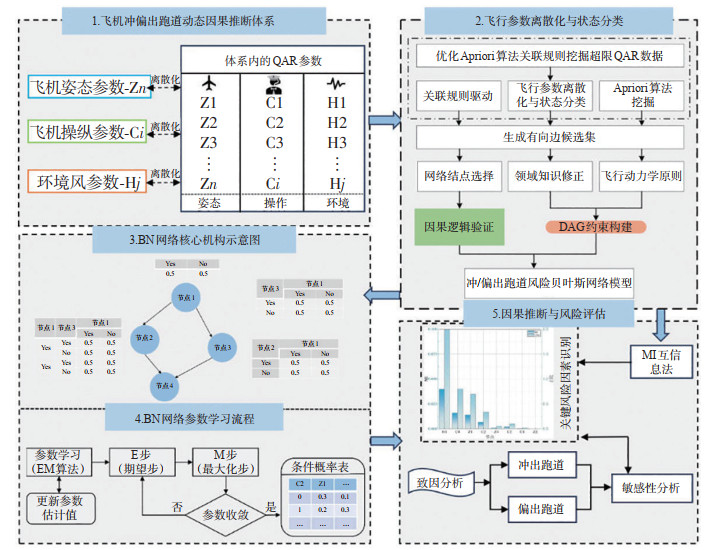
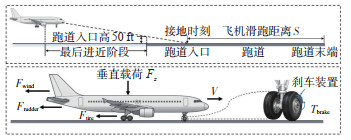
图 1 飞机着陆阶段风险形成过程示意图
Figure 1. Schematic diagram of aircraft landing process and risk factors

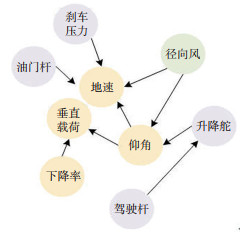
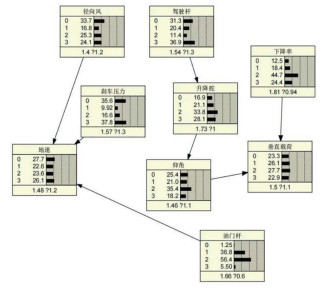
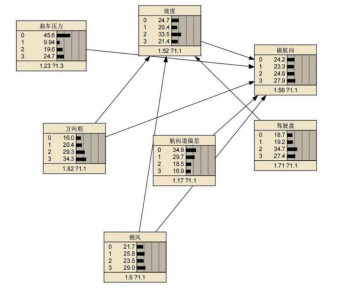
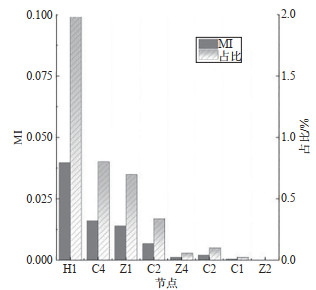
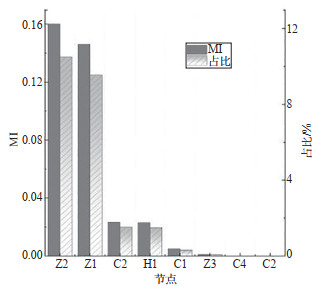
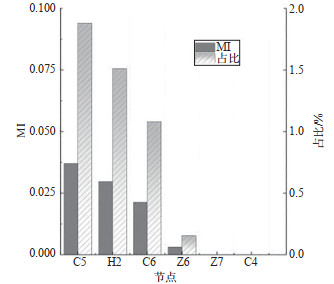
图 5 冲出跑道贝叶斯网络参数学习结果
Figure 5. Parameter learning results of Bayesian network for runway overrun

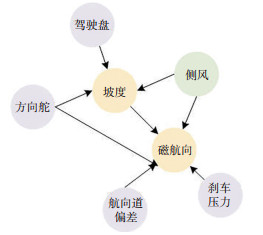
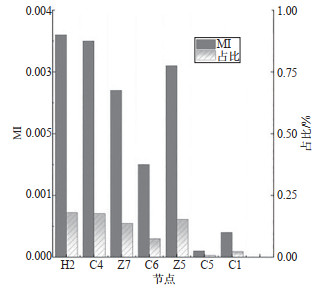
图 6 偏出跑道贝叶斯网络参数学习结果
Figure 6. Parameter learning results of Bayesian network for runway veer-off
表 1 核心参数状态分级与物理数值对照示例
Table 1. Examples of state classification and physical value correspondence for key parameters
状态等级 地速Z3/knot 垂直载荷Z4/g 坡度Z5/ (°) 状态0 (低) $ \leqslant 11.0 $ >11.0~37.0 >37.0~108.0 状态1 (中) $ \leqslant 0.96 $ >0.96~0.98 >0.98~1.00 状态2 (高) $ \leqslant 0.18 $ >0.18~0.25 >0.25~0.35 状态3 (极高) >108.0 >1.00 >0.35 注: 表中物理数值为随机抽取单一航班数据的四分位划分示例,仅用于展示本文的离散化方法。  下载: 导出CSV
表 2 参数名与分类状态
Table 2. Parameter name and classification status
分类 序号 参数名 代号 采样频率/Hz 分类状态 飞机状态 1 仰角 Z1 8 {0, 1, 2, 3} 2 下降率 Z2 4 {0, 1, 2, 3} 3 地速 Z3 1 {0, 1, 2, 3} 4 垂直载荷 Z4 16 {0, 1, 2, 3} 5 坡度 Z5 4 {0, 1, 2, 3} 6 磁航向 Z6 1 {0, 1, 2, 3} 7 航向道偏离 Z7 1 {0, 1, 2, 3} 飞机操纵 1 驾驶杆位置 C1 1 {0, 1, 2, 3} 2 升降舵位置 C2 1 {0, 1, 2, 3} 3 油门杆位置 C3 1 {0, 1, 2, 3} 4 刹车压力 C4 1 {0, 1, 2, 3} 5 驾驶盘位置 C5 1 {0, 1, 2, 3} 6 方向舵位置 C6 8 {0, 1, 2, 3} 气象条件 1 径向风 H1 1 {0, 1, 2, 3} 2 侧风 H2 1 {0, 1, 2, 3}
下载: 导出CSV
表 3 冲偏出跑道风险因素关联规则汇总表
Table 3. Association rules of risk factors for runway excursion
风险维度 目标参数(Y) 代表性关联影响因素(X) 支持度 置信度 冲出跑道 仰角(Z1_3) 径向风(H1_0)+升降舵位置(C2_0) 0.156 0.900 地速(Z3_3) 仰角(Z1_3)+油门杆位置(C3_3) 0.155 0.995 偏出跑道 垂直载荷(Z4_3) 仰角(Z1_3) 0.105 0.447 磁航向(Z6_1) 坡度(Z5_3) 0.153 0.634 坡度(Z5_0) 航向道偏离(Z7_0) 0.144 0.531 注:参数采用“代号_等级”形式,下划线后的数字代表四分位离散化等级(如0代表低风险,3代表极高风险)
下载: 导出CSV
表 4 冲出跑道关键路径识别结果
Table 4. Key path identification results for runway overrun
分类 目标节点 上游节点 先验概率 后验概率 变异率$\left(I_{\text {ROV }}\right)$ 地速 Z3 H1 0.268 0.343 0.280 C4 0.209 0.273 0.306 C2 0.259 0.293 0.131 Z1 0.247 0.333 0.348 垂直载荷 Z4 Z1 0.244 0.611 1.504 Z2 0.045 0.221 3.911
下载: 导出CSV
表 5 偏出跑道关键路径识别结果
Table 5. Key path identification results for runway veer-off
分类 目标节点 上游节点 先验概率 后验概率 变异率$\left(I_{\text {ROV }}\right)$ 坡度 Z5 Z6 0.233 0.262 0.125 H2 0.235 0.249 0.060 C6 0.293 0.358 0.222 磁航向 Z6 Z5 0.335 0.342 0.021 H2 0.258 0.273 0.058 Z7 0.169 0.182 0.077 C6 0.344 0.369 0.073 C4 0.457 0.481 0.053
下载: 导出CSV
-
[1] Boeing Commercial Airplanes. Statistical summary of commercial jet airplane accidents: worldwide operations 1959—2025[R]. Seattle, WA: The Boeing Company, 2026. [2] 张宇辉, 胡思睿, 常鑫. 飞机雷雨情景着陆冲偏出跑道的贝叶斯网络风险分析[J]. 安全与环境学报, 2024, 24(10): 3709-3718.ZHANG Y H, HU S R, CHANG X. Bayesian network risk analysis of aircraft runway excursion during thunderstorm scenarios[J]. Journal of Safety and Environment, 2024, 24(10): 3709-3718. (in Chinese) [3] FWA T F. Pavement skid resistance properties for safe aircraft operations[J]. Journal of Road Engineering, 2024, 4(4): 361-385. doi: 10.1016/j.jreng.2024.11.002 [4] GARCIA J S D, JAEDICKE C, LIM G L, et al. Predicting the severity of runway excursions from aviation safety reports[J]. Journal of Aerospace Information Systems, 2023, 20(9): 555-564. doi: 10.2514/1.I011145 [5] LEE Y. Causal factors analysis of runway excursion occurrences through fuzzy logic modeling method[J]. Transportation Engineering, 2023, 14: 100204. doi: 10.1016/j.treng.2023.100204 [6] KONG Y, ZHANG X, MAHADEVAN S. Bayesian deep learning for aircraft hard landing safety assessment[J]. IEEE Transactions on Intelligent Transportation Systems, 2022, 23(10): 17062-17076. doi: 10.1109/TITS.2022.3162566 [7] 齐心歌, 刘畅. 融合复杂网络与因果推断的REA风险演化研究[J]. 中国安全科学学报, 2025, 35(9): 167-175.QI X G, LIU C. Research on REA risk evolution by fusing complex network and causal inference[J]. China Safety Science Journal, 2025, 35(9): 167-175. (in Chinese) [8] QI X G, LIU C, FAN D, et al. Causal modeling and risk assessment of runway excursion events via interpretable machine learning[J]. Reliability Engineering & System Safety, 2026, 269: 112055. [9] CHU L, LIU Y Y, FWA T F. Estimating runway overrun risks of landing aircraft[J]. Journal of Infrastructure Systems, 2024, 30(2): 04024002. doi: 10.1061/JITSE4.ISENG-2419 [10] 潘安庭, 张春阳, 许星, 等. 基于BN和TEM分析法的民机进近着陆阶段风险研究[J]. 自动化应用, 2025, 66(12): 259-262.PAN A T, ZHANG C Y, XU X, et al. Risk research of civil aircraft approach and landing stage based on BN and TEM analysis method[J]. Automation Application, 2025, 66(12): 259-262. (in Chinese) [11] 汪磊, 李蕊君, 王菲茵. 基于QAR数据与互信息法的进近风险评估模型[J]. 交通信息与安全, 2024, 42(4): 21-29. doi: 10.3963/j.jssn.1674-4861.2024.04.003WANG L, LI R J, WANG F Y. Approach risk assessment model based on QAR data and mutual information method[J]. Journal of Transport Information and Safety, 2024, 42(4): 21-29. (in Chinese) doi: 10.3963/j.jssn.1674-4861.2024.04.003 [12] 汪磊, 张楠, 高杉. 基于QAR数据与关联规则的着陆阶段超限风险评估[J]. 北京航空航天大学学报, 2025, 51(6): 1907-1915.WANG L, ZHANG N, GAO S. Risk assessment of landing phase exceedance based on QAR data and association rule[J]. Journal of Beijing University of Aeronautics and Astronautics, 2025, 51(6): 1907-1915. (in Chinese) [13] WANG F, YUAN J, LIU X, et al. Impacts of flight operations on the risk of runway excursions[J]. Applied Sciences, 2024, 14(3): 975. doi: 10.3390/app14030975 [14] 崔秀芳, 曾杰熙, 邵志鹏, 等. 融合N-K-DBN模型的船舶自沉事故风险因素动态耦合分析[J]. 安全与环境学报, 2025, 25(6): 2080-2091.CUI X F, ZENG J X, SHAO Z P, et al. Dynamic coupling analysis of risk factors in ship self-sinking accidents using the N-K-DBN model[J]. Journal of Safety and Environment, 2025, 25(6): 2080-2091. (in Chinese) [15] 卢飞, 魏星宇, 陈昊南. 民航飞行员着陆操作品质综合评价体系研究[J]. 安全与环境学报, 2025, 25(2): 558-571.LU F, WEI X Y, CHEN H N. Research on the comprehensive evaluation system of civil aviation pilot landing operation quality[J]. Journal of Safety and Environment, 2025, 25(2): 558-571. (in Chinese) [16] 王可, 邵静雯, 杨俊. 基于贝叶斯网络的某民用飞机着陆距离研究[J]. 航空工程进展, 2025, 16(2): 160-167.WANG K, SHAO J W, YANG J. Research on landing distance of a civil aircraft based on Bayesian network[J]. Advances in Aeronautical Science and Engineering, 2025, 16(2): 160-167. (in Chinese) [17] CHEN H, YANG M, TANG X. Association rule mining of aircraft event causes based on the Apriori algorithm[J]. Scientific Reports, 2024, 14: 13440. doi: 10.1038/s41598-024-64360-6 [18] LU N, MENG B. Risk analysis of airplane upsets in flight: an integrated system framework and analysis methodology[J]. Aerospace, 2023, 10(5): 446. doi: 10.3390/aerospace10050446 [19] 霍小森, 杜爽, 谭琪麟, 等. 基于数据驱动贝叶斯网络的地铁施工事故致因差异化分析[J]. 铁道科学与工程学报, 2025, 22(4): 1802-1814.HUO X S, DU S, TAN Q L, et al. Differential analysis of causes of subway construction accidents based on data-driven Bayesian networks[J]. Journal of Railway Science and Engineering, 2025, 22(4): 1802-1814. (in Chinese) [20] 刘璐, 陈玲, 朱晓波, 等. 航空器冲偏出跑道事件关键人为因素分析方法[J]. 科学技术与工程, 2025, 25(22): 9640-9648.LIU L, CHEN L, ZHU X B, et al. Analytical method for critical human factors in the event of runway overrun and veer off[J]. Science Technology and Engineering, 2025, 25(22): 9640-9648. (in Chinese) -

 点击查看大图
计量
- 文章访问数: 16
- HTML全文浏览量: 12
- PDF下载量: 0
- 被引次数: 0